School-Based Education
Specialized Educational Support for Students with Vision Loss
Students who are blind or have low vision require specialized instruction and accommodations to fully access learning and develop the skills needed for independence and academic success. Through individualized support from The Carroll Center for the Blind’s experienced staff, students build compensatory skills, access curriculum more effectively, increase independence, and develop confidence to reach their full potential.
Benefits of Education Services at the Carroll Center
We partner with school teams to support the educational, social-emotional, and developmental needs of students with visual impairments, including those with additional disabilities. Services are individualized and aligned with Department of Education guidelines and the Individuals with Disabilities Education Act (IDEA).
The Carroll Center for the Blind’s experienced Teachers of Students with Visual Impairments (TVIs), Rehabilitation Therapists (VRTs), and Certified Orientation & Mobility Specialists (COMS) provide assessment, consultation, and direct instruction for school-age students across a variety of educational settings.
Assessment
The Carroll Center’s vision professionals conduct many types of assessments to identify the most appropriate accommodations, modifications, services, strategies, and tools for each student’s educational program, including:
Functional Vision Assessment, including CVI Assessments
A Functional Vision Assessment is done to determine how a student with a visual impairment uses their vision in everyday activities of learning. It can help determine what supports, services, accommodations, and modifications may be needed to allow the student access to curriculum, learning, and social experiences of the school. For students with CVI (Cortical/Cerebral Visual Impairment), an additional CVI-specific tool may be used to ensure that the impact of this brain-based visual impairment is accurately assessed and that any needed supports meet the student’s unique needs.
Learning Media Assessment
Often done in conjunction with a Functional Vision Assessment, a Learning Media Assessment helps to identify how a student best receives and understands learning media in the classroom and other educational settings. Students may use vision (print and visual materials), touch (braille and tactual learning), or auditory (listening) to access information, and many students use a combination of these. Understanding how a student accesses information can help guide instruction and ensure access to all learning materials.
Orientation & Mobility Assessments
An Orientation & Mobility Assessment is important to ensure that a student with visual impairment can understand and safely move through their environments with independence. This assessment looks at how a student understands spatial relationships, how they navigate familiar and unfamiliar environments, including school and community locations, and what tools or techniques they may need to improve those skills. Students who are not yet independently mobile, those who use wheelchairs, and those with additional disabilities still benefit from this type of assessment in order to determine their need for any additional supports, strategies, tools, or services.
Assistive Technology Assessments
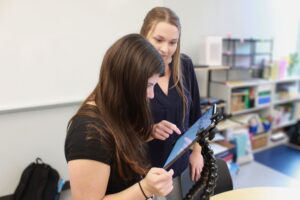
For a student who is blind or visually impaired, an Assistive Technology Assessment may be completed to determine what types of assistive technology, such as screen readers, magnification devices, or braille devices, would most effectively support the student’s access to learning. Such an assessment might look at both low and high-tech options for students.
Braille Assessments
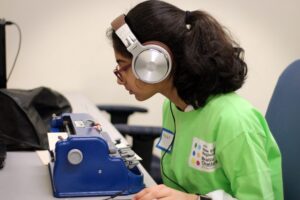
Students who are braille learners may need a Braille Assessment to look at their tactual skills, how efficiently they are reading, and braille skills that have not yet been mastered. These assessments may be used for students who are emergent, academic, or functional braille learners.
Consultation
- Effective, collaborative consultation is provided to educational teams to ensure that students can access the General Education curriculum and all parts of the “life of the school” through accommodations and supports.
- TVIs and COMS meet with the student’s team, which can include general education teachers, special education teachers, and related service providers such as PTs, OTs, SLPs, Educational Audiologists, and others, to develop strategies and supports that can be implemented during the student’s day to allow access to learning.
- TVIs and COMS also provided ongoing education and training to the team members to understand the implications and impact of the student’s visual impairment on their access to school and community experiences.
Individualized Instruction
- We provide high-quality, individualized instruction in the Expanded Core Curriculum, a framework of nine components that ensures students with visual impairments have the necessary skills for success in school and beyond.
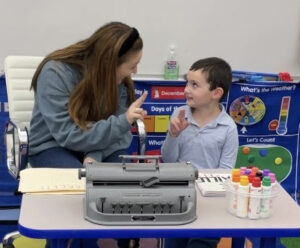
- TVIs and COMS may work with students within their classroom or educational settings, or in individual or small group settings, to focus on goals and benchmarks for the student’s learning as determined by the IEP team.
- TVIs and COMS frequently collaborate with general education and special education teachers, as well as related service providers, to help ensure that a student has the necessary tools and skills to access the curriculum materials, lessons, and activities. They may order adaptive supplies, modify existing materials, or adapt materials to meet the students’ visual or tactual needs.
Additional Services and Supports
Carroll Center TVIs and COMS work to support the student, family, and educational team in understanding the impact of visual impairment on learning while also providing opportunities for skill development. By engaging with other services, supports, and activities offered at the Carroll Center, students and families can build on the successes at school.
- Assistive Technology Evaluations
- Summer Youth Programs
- Carroll Families Community
- Cane Quest Event
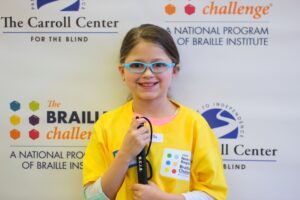
- Braille Challenge Event
Get Started
If you are a school district looking for an assessment or services for your student, please use our Online Referral form to send your request.